

Nigeria’s telecommunications networks are facing their worst year of service disruptions yet, with major outages hitting record highs by May 2025. The sharp rise—largely caused by fibre cuts, grid failures, and technical breakdowns—is testing the resilience of Africa’s largest mobile market and spotlighting deep-rooted infrastructure challenges.
Data from Uptime, a network monitoring platform, paints a troubling picture: from January to May 19, 9mobile reported 31 major outages, the highest among all mobile network operators. MTN Nigeria followed closely with 25 incidents.
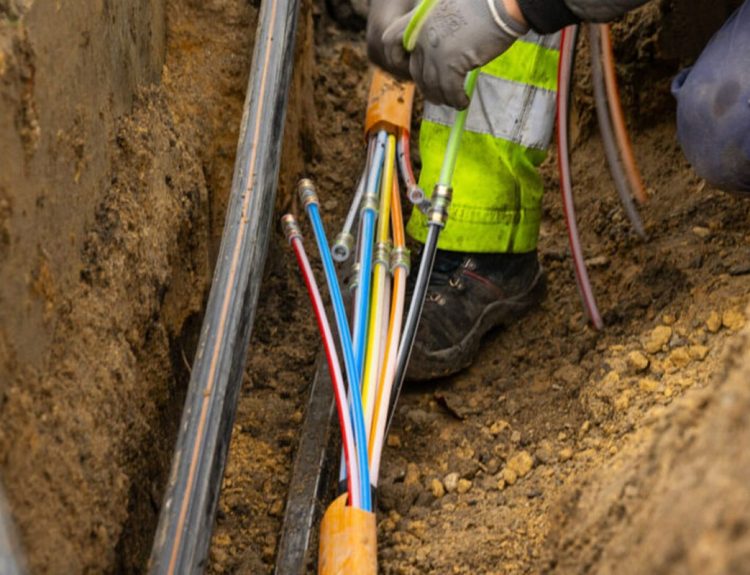
Fibre cuts—mostly due to roadworks and vandalism—accounted for around 70% of all disruptions. These outages crippled essential services, from mobile internet and voice calls to SMS and USSD transactions, leaving millions in digital darkness for hours.
While all major operators—Globacom (20 outages) and Airtel (13)—were affected, 9mobile stood out for the wrong reasons. Not only did it suffer the most incidents, it also recorded the longest service restoration times.
On May 14, for instance, a power failure shut down 9mobile’s network across Lagos, affecting densely populated areas such as Agege, Apapa, and Eti-Osa. Service was only restored after more than eight hours. Just days earlier, a fibre cut knocked out 9mobile’s data services in several northern states, including Kano, Jigawa, and Katsina.
In another striking example, base stations in Kebbi and Sokoto were offline for more than two weeks following an April 29 power outage. Engineers only restored connectivity after deploying 7,000 litres of diesel—an expensive and logistically complex workaround.
9mobile’s dwindling subscriber base—down to just 2.96 million users in March 2025 from over 20 million a decade ago—adds urgency to its need for a credible turnaround. But the operator’s repeated delays in service restoration, especially when compared to competitors, may further erode customer trust and investor confidence.
Despite its high outage numbers, MTN fared better in response times. According to Uptime, the telecom giant typically resolved fibre-related issues within hours. A May 11 incident that disrupted services in Bayelsa and Rivers, for example, was fixed in just over 60 minutes.
The company’s longest recorded downtime—3 hours and 12 minutes—was linked to a fibre cut in Benue that affected 12 communities.
However, MTN also faced political setbacks. In April, the Kogi State government shut down 16 MTN sites over alleged regulatory non-compliance, cutting off access to 155 connected locations. The standoff dragged on for nearly a month, underlining the complex legal and regulatory minefield telcos must navigate.
To strengthen its operations, MTN has pledged ₦800 billion in infrastructure investment this year, with ₦200 billion already deployed in Q1—a 159% jump from the same period last year.
The investment includes rapid-response strategies like deploying motorcycles to help engineers reach sites faster in traffic-heavy cities like Lagos and conduct daily fibre line inspections to prevent future breakdowns.
The stakes are high. More than 140 million Nigerians depend on mobile networks for everything from banking and online learning to logistics and emergency services. In a nation pushing for digital inclusion and broadband expansion, telecom stability is no longer optional—it’s fundamental.
Comparatively, countries like South Africa and Kenya enjoy more robust networks and faster response times, thanks to stronger infrastructure and consistent power supply. In Johannesburg and Pretoria, emergency WiFi support arrives within 35 to 80 minutes, while Nigeria’s outages sometimes linger for days.
Nigeria’s telecom sector is at a critical juncture. The Nigerian Communications Commission (NCC) has licensed over 40 Mobile Virtual Network Operators (MVNOs) in a bid to boost competition and lower consumer costs. But the success of these new entrants will hinge on the strength and stability of the incumbent MNOs’ networks.