
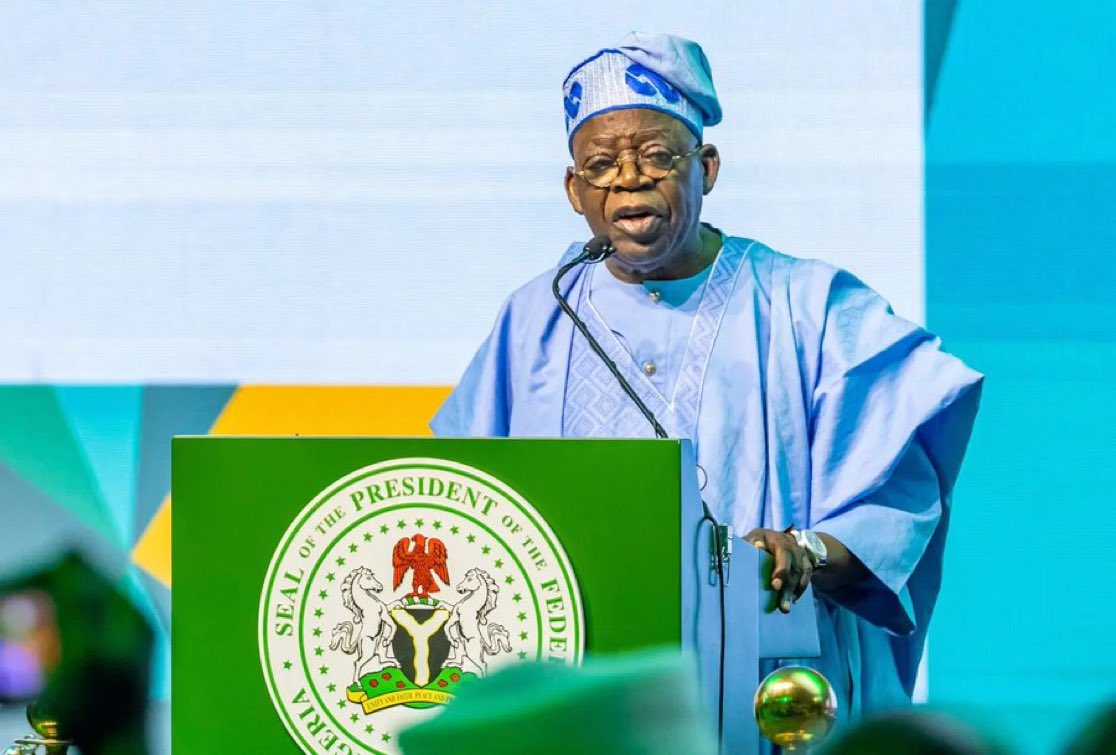
President Bola Tinubu has defended his administration’s borrowing strategy, saying Nigeria is now taking loans mainly to finance infrastructure projects rather than cover budget shortfalls as the government pursues its target of building a $1 trillion economy by 2030.
Tinubu stated this in an essay titled “From Reforms to Delivery: Our Infrastructure Investment and Growth Strategy,” released on Thursday, October 29, 2026, through his Special Adviser on Information and Strategy, Bayo Onanuga.
“The real question is not how much we borrow, but what we build, what value we create and what future we leave behind,” the President wrote.
He said the government was shifting from borrowing to meet immediate fiscal needs towards investments expected to generate long-term economic returns, create jobs and expand opportunities.
Tinubu linked the strategy to his administration’s ambition of growing Nigeria’s economy to $1 trillion by 2030, arguing that the target would require infrastructure capable of supporting a larger economy.
“We cannot build a USD 1 trillion economy with infrastructure designed for an economy a fraction of that size,” he said.
The President identified the Lagos-Calabar Coastal Highway, Sokoto-Badagry Superhighway, Trans-Sahara Superhighway, electricity grid upgrades and the modernisation of major commercial ports in Lagos as key projects under the infrastructure drive.
According to him, the projects are expected to improve connections between markets, support agricultural and industrial activities, reduce transportation costs and attract private investment.
Tinubu projected that the Lagos-Calabar Coastal Highway could reduce logistics costs along its corridor by 15 to 20 per cent. He also estimated that expanded trade, tourism and industrial activity could contribute up to two per cent to gross domestic product, while the project could generate about 100,000 direct jobs and more than 150,000 indirect jobs.
The President’s comments come amid public debate over a proposed $21.7 billion external borrowing plan submitted to the National Assembly.
Finance Minister and Coordinating Minister of the Economy Taiwo Oyedele has said the proposed financing covers 46 projects across 11 sectors, with about $10.6 billion allocated to transportation infrastructure. The funding package is expected to include concessional and blended financing, including facilities from the World Bank.
Tinubu maintained that the economic reforms introduced since May 2023 had helped restore macroeconomic stability, strengthen public finances and improve Nigeria’s standing in international markets.
He said the effectiveness of the government’s borrowing strategy would ultimately be measured by the completion of infrastructure projects and improvements in citizens’ living standards.