
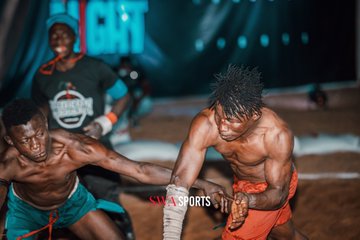
With fists wrapped in rope and arms bearing charms steeped in tradition, Nigerian fighters stepped into the ring over the weekend for a historic kickoff of the Dambe World Series — a bold new chapter for the centuries-old martial art.
Held on the grounds of the national stadium in Abuja and streamed globally via British sports platform DAZN, the tournament marked a major leap from the humble origins of Dambe, a combat sport rooted in the Hausa culture of West Africa.
“This isn’t about Westernising it. We’re professionalising it,” said Maxwell Kalu, founder of the West African Fighting Championship (WAFC), the group behind the event. “And we’re opening the door for fighters across the world to come compete in Nigeria.”
Once seen only in backstreets and village squares, Dambe is now drawing the attention of international fans, thanks to a growing online presence. What was once a local test of manhood between Hausa butchers has become a showcase of Nigerian heritage — raw, unfiltered, and now, reimagined for the global stage.
Among the fighters on Saturday was 20-year-old Abdullahi Ali, known in the ring as “Coronavirus” for his fierce, unrelenting strikes. “This one is big,” he said with a smile. “The audience is growing every day.”
Behind him in Dei Dei, a working-class suburb of Abuja, two amateurs battled it out in a dusty exhibition match. Makeshift wooden stands groaned under the weight of cheering spectators, while chickens wandered beneath and smoke curled above from cigarettes lit in anticipation.
The Ritual of the Ring
Unlike traditional boxing, Dambe fighters strike with only one arm — tightly wrapped in cloth and rope — while the other is left free to defend or disrupt. Victory is declared when an opponent touches the ground, known simply as a “kill.”
But the spectacle isn’t just physical. Fighters often dye their fists with henna, cut charm-infused incisions into their arms, and seek blessings from spiritual guides known as mallams. In a sport where myth meets muscle, these rituals are believed to deliver both protection and power.
Yet, as Dambe surges into the limelight, some of its long-standing dangers have come into sharper focus.
“I once took a hit to the chest that kept me out for two years,” said 20-year-old fighter Usman Abubakar, arm etched with scars from traditional medicine. “If I get married, I won’t let my children do it.”
Kalu and the WAFC are looking to change that by introducing safety measures, structured pay, and medical oversight — the building blocks of a sustainable, professional sport.
From Side Streets to Stadium Lights
Once considered a relic of rural culture, Dambe’s rise has been turbocharged by social media. In 2017, one promoter told the BBC that 60% of online viewers were based outside Nigeria. In 2018, a Dambe event in Lagos drew thousands eager to see the northern-born spectacle in a stadium setting.
More recently, Lagos hosted the African Knockout Championship, featuring a more Western brand of mixed martial arts. But Kalu believes Nigeria has something unique to offer — and wants the world to come here to see it.
“This is not just sport. It’s culture, it’s identity,” he said.
The Nigerian Edge
With dreams of an international tournament, Saturday’s fighters weren’t just competing for glory — they were vying to represent Nigeria in future global stages.
Last year, British fighter Luke Leyland became the first white competitor to step into a Dambe ring in Nigeria. Though soundly defeated, Leyland praised the experience and the fighters’ discipline.
When asked how they felt about foreign challengers, Ali, Abubakar, and fellow fighter Anas Hamisu welcomed the idea — but with a smile, all three offered the same confident prediction.
“The Nigerians will win,” they said.
And judging by the crowd’s roar and the fighters’ ferocity, they just might be right.