

By: Idowu Halimah, Jumah Ziyadat, Kayode Opeyemi, James Glory
The business environment in Nigeria has proven to be challenging for many enterprises, particularly for small and hustling business owners.
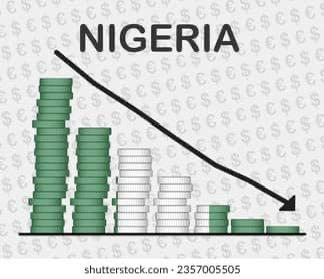
The inflationary pressure that the country has been experiencing for some time now has left many small businesses struggling to stay afloat. They are fighting to keep their heads above water and avoid going bankrupt or wounding up.
In recent times, these businesses have had to put in extra efforts and add more supplementary products to stock to sustain their businesses, due to the economic situation of the country. The economic situation has dictated and changed the trajectory of businesses, from making low sales to little profits at the end of an ideal business day.
One of the business owners, Mrs Taiwo Yusuf, a trader who has been running her business for 3 years has lamented that the prices of goods have skyrocketed to the extent that people no longer buy as much quantities as they usually do. While speaking to the press, she also stated that not only has the poor economic situation affected her customers’ purchasing power, but it has also affected the quantity of goods that she stocks up.
“When we started, things were not expensive like the way we are buying things now”, she said. She continued “Let me give this example. We buy indomitable around N7,000 that time from the market and we could afford to buy 10 cartons. But now, we can only afford to buy like 6 cartons because it is now N10,700.”
Sharing a similar ordeal with Mrs Yusuf is Miss Khafayat Idris who sells attachment extensions and owns a salon, described her recent experience in her business as discouraging as she could go weeks without making any sales and getting only enquiries. This, she ascribes to the high cost of attachment extensions which have skyrocketed from N2,800 – N5,500, N6,000.
“Sometimes, for two weeks, we’ll be in the shop and people will just come, make enquiries and go.” she lamented. She further added that “people used to come in to make enquiries to prepare ahead and get their budget ready, but now, they just make enquiries and we don’t see them come back.
Also, Studentpreneurs are not left out. Not only are the business owners struggling to keep their businesses running, but students who double as entrepreneurs also battle the same menace. Economic situation, financial status, and struggle for survival are some of the factors that drive students in the university to start businesses.
It is, however, unfortunate that the economic situation of the country is failing these students as they are unable to achieve set up goals with their businesses.
A student of bio-chemistry at The Polytechnic, Ibadan, Agboola Zainab has also had a fair share of the poor economic situation of the country. Zainab, who was driven by her passion for the fashion world to start a fashion accessories business explains that her business has been stuck, stagnant and discouraging.
She explains that business has been stagnant and customers no longer buy as much as they did before, which has affected the growth of her small business. Zainab also complained about the lack of funds to continue to run the business.
Another striving studentpreneur and a University of Ilorin Chemistry student, Chimamanda Praise, acknowledged that while her business has been going smoothly, lack of adequate funds has hindered her from acquiring the latest tools for her nails and lash business to boom better and make her work easier.
Praise said, “Every day, new designs and styles come out and for me to be up to date, I need to get those materials like a spraying machine. Before, I could use only electrical dryers, but now, they are going into extinction.”
She added further “Dryers are now provided that don’t require to be plugged directly to electricity, but I need money to get it.”
According to the International Labour Organisation, small businesses make up 96 per cent of all businesses in Nigeria and are responsible for contributing 48 per cent to the country’s GDP. Not just that, these businesses provide 84 per cent of the country’s employment opportunities. So, it’s only right for solutions to be preferred to the problems that these businesses face.
A professor of Economics, Professor Kiishi Abdulhakeem, who highlighted the rise in price of inputs due to exchange rates, and increased rate of importing as problems facing businesses in Nigeria, explained that the solution to the issue is for incentives to be given to the youth to engage in agriculture production.
Professor Abdulhakeem explained that the amount used in importing goods is now tripled which ultimately affects the cost of production and profit. “…because the lesser the cost of production, the higher the profit. And if profit is falling, it affects the business.”, he added.
Proffering solution, the professor of economics urges the government to improve the standard of living in the rural areas so that the agriculture business can be revived again and Nigerians can produce the raw materials needed.
He also added that the government should focus on the development of infrastructure while highlighting electricity as another hindrance to the success of businesses that do mass production.
Similarly, Salman Ajibola, a business administrator highlighted good roads, a change in attitudes of stakeholders and an improvement in power supply to improve the landscape of businesses.
Speaking on behalf of studentpreneurs, Agboola Zainab urged the government to grant loans with affordable interest to small studentpreneurs in order to fund their businesses and help their businesses scale faster.