

President Bola Tinubu has asked the National Assembly to approve a fresh external borrowing of $7.7 billion, equivalent to about ₦10.79 trillion, to finance part of the Federal Government’s 2026 budget deficit.
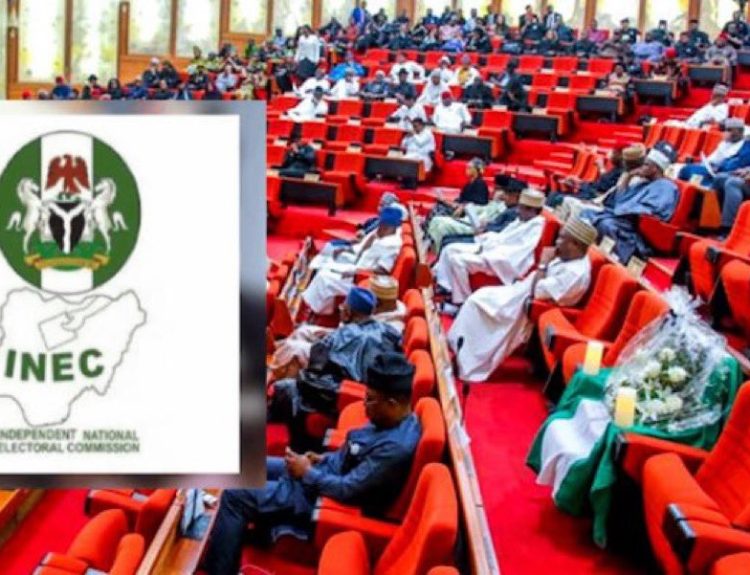
The request was contained in a letter dated October 26, 2026, addressed to Senate President Godswill Akpabio and read during Wednesday’s plenary session. The Senate referred the proposal to its Committee on Local and Foreign Debts for consideration.
According to the letter, the proposed external loan represents the foreign component of the new borrowing approved under the 2026 Appropriation Act. The government plans to raise ₦29.2 trillion in new loans as part of efforts to finance a projected budget deficit of approximately ₦31.4 trillion.
The borrowing plan comprises ₦18.4 trillion in domestic loans and about ₦10.79 trillion in external financing, calculated at the budget exchange rate of ₦1,400 to the dollar.
Tinubu said the request was made in line with Sections 21(1) and 27(1) of the Debt Management Office (Establishment, etc.) Act, 2003, which require legislative approval for external borrowing.
He asked lawmakers to authorise external loans amounting to ₦10,790,366,835,481, equivalent to $7,707,404,882.49.
The Federal Government plans to access the funds through one or a combination of international financing options, depending on prevailing market conditions and the cost and speed of obtaining the loans.
The proposed options include Eurobond issuance, concessional and commercial loans from multilateral and bilateral institutions, facilities from the International Monetary Fund and syndicated loan arrangements.
The President said Eurobonds would receive priority because they could provide access to larger amounts of funding and are generally faster to conclude. The Ministry of Finance and the Debt Management Office are expected to negotiate interest rates, repayment periods and other terms considered favourable to the country.
The funds are expected to support projects and programmes captured in the 2026 budget, particularly in defence and security, transportation, agriculture, power, education and healthcare.
According to the proposal, foreign currency proceeds would be received by the Central Bank of Nigeria on behalf of the Federal Government. The administration said the inflows could strengthen external reserves, support exchange rate stability and complement its ongoing economic reforms.
Senate President Akpabio said the latest request effectively replaces an earlier proposal submitted the previous week, which sought approval for about $20.52 billion and €1.045 billion under the 2026–2027 Supplementary External Borrowing Plan.
Akpabio described the new communication as more specific, noting that the government would not necessarily raise the entire amount at once but would seek financing under the most favourable available terms.
The Senate Committee on Local and Foreign Debts is expected to examine the request and submit its report to the chamber for further legislative action.
The proposal comes amid continued debate over Nigeria’s public debt, borrowing costs and the government’s ability to meet its spending commitments while financing infrastructure and other priorities under the 2026 budget.