
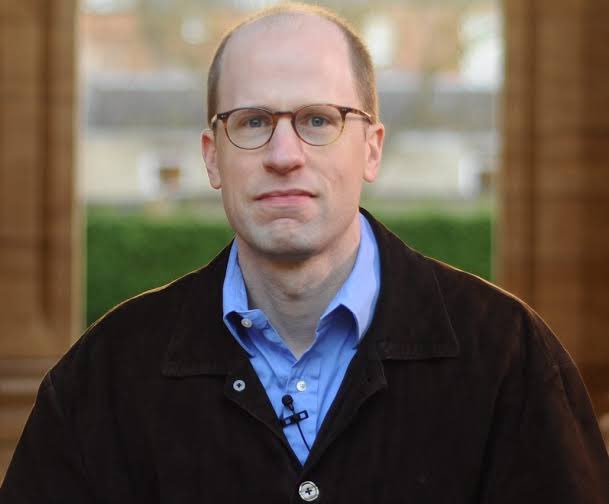
Swedish philosopher Nick Bostrom, known for his work on existential risks and artificial intelligence, has said humans could reach life expectancies of roughly 1,200 to 1,400 years if aging is eliminated through advances enabled by AI, particularly safe superintelligence.
He made the remarks in an episode of the a16z show released on Thursday, 19 November 2026, in which he spoke with hosts Eddy Lazzarin and Elena Burger. He described the figure as a calculation of the mortality risks that would remain once biological aging is removed. “If you think about what our life expectancy would be if we weren’t aging, it’s something on the order of, you know, 1,200, maybe 1,400 years or so,” he said. He called the estimate “quite a conservative lower bound,” adding that further cuts in accident and other non-aging mortality risks could push it higher.
Bostrom said such a outcome depends on safe superintelligence being developed successfully. He argued that these systems could drive major breakthroughs in biomedicine and anti-aging treatments capable of greatly extending the lives of people alive today.
In the same discussion, he turned a common framing of AI risk around, referring to the argument in the book If Anyone Builds It, Everyone Dies. He said roughly 95 per cent of all humans who have ever lived are already dead, and that those alive today remain on a trajectory of mortality measured in decades. Delaying the development of beneficial superintelligence, he said, carries its own large human cost in ongoing deaths from aging and disease.
In related commentary, he has put the daily toll at around 150,000 deaths. He has also noted that current gains in life expectancy, roughly two to three months per year, fall far short of the one year of gain per year that would be needed to keep pace with what solving aging could offer. His view, set out in the interview and in his writing on the timing of superintelligence, is that short pauses of a few months may sometimes be justified for safety work, but multi-year or indefinite delays are hard to justify given the ongoing mortality burden.
Bostrom is a former Oxford professor and founder of the Future of Humanity Institute, which closed in 2024. He is the author of the 2014 book Superintelligence: Paths, Dangers, Strategies and, more recently, Deep Utopia. The 1,200 to 1,400-year figure is a speculative projection that assumes age-related mortality is eliminated while accident and other mortality rates stay at roughly those of young adults. It is not a prediction of imminent technology or a guarantee of outcomes. Bostrom has long argued that radical life extension is technically plausible in principle and morally urgent, a position he set out in earlier essays such as “The Case Against Aging.”