
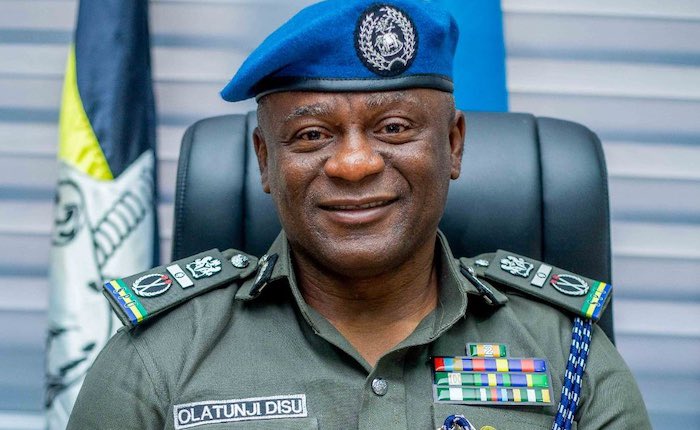
The Inspector-General of Police, Olatunji Rilwan Disu, has raised concerns over the deaths of police officers and inadequate operational equipment, saying personnel continue to risk their lives despite lacking the resources needed to perform their duties.
Disu made the remarks in a video circulating on social media on Saturday, November 7, 2026, while addressing Minister of Defence, General Christopher Musa (retd.), during discussions on Nigeria’s security challenges.
“Every day, policemen are dying. We don’t have the equipment needed to do this job, but we are still doing it,” the police chief said.
His comments came shortly after Musa disclosed that military personnel were exhausted from prolonged deployments across the country, with some soldiers spending up to two years away from their families.
The defence minister had called for improved recruitment and operational capacity within the Nigeria Police Force, arguing that a stronger police force would reduce the need for military involvement in routine internal security operations.
Musa expressed hope that the military would eventually withdraw from such duties and return to the barracks to rest and rebuild its operational capacity.
Disu’s remarks have drawn attention to the equipment and welfare challenges facing police personnel who confront armed groups, bandits, terrorists and other criminal networks across the country.
Police officers frequently operate in difficult security environments where access to modern protective equipment, functional vehicles, appropriate weapons and other operational resources remains a concern.
Data compiled from security incidents across 21 states between January and October 2026 indicated that at least 98 police officers had been killed during the period, with bandits, gunmen and terrorists responsible for most of the reported deaths. Yobe, Zamfara and Kebbi were among the states that recorded particularly high fatalities.
The latest comments are not the first time Disu has spoken publicly about casualties within the police force.
In June 2026, he expressed concern over the deaths of Explosive Ordnance Disposal officers who lost their lives while attempting to neutralise improvised explosive devices.
He has also called for improvements in police welfare, housing, pensions, operational funding and capacity building, including during a recent engagement with the Minister of Police Affairs.
The exchange between the police chief and the defence minister has also brought renewed attention to the responsibilities of the police and military in Nigeria’s security architecture.
While the police have primary responsibility for internal security and law enforcement, the military has continued to undertake extensive domestic security operations in response to insurgency, banditry and other threats.
Musa has indicated that additional police recruitment and improved operational capacity could help address the situation and allow military personnel to gradually return to their traditional responsibilities.
The concerns raised by both security chiefs have generated public discussions about the need for better equipment, training, funding and welfare support for officers operating on the front lines of Nigeria’s security challenges.