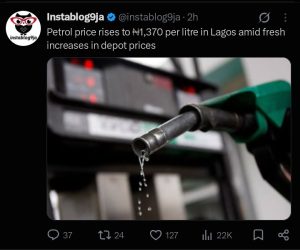

Petrol is selling for as much as ₦1,370 per litre at some filling stations in Lagos, according to reports circulating on Wednesday, November 4, 2026, following recent changes in depot prices.
Instablog9ja shared the update on X, stating that the pump price had risen to the new level in parts of the commercial capital. The post, which included a photograph of a fuel nozzle, attracted reactions from users concerned about the impact of rising fuel costs on households and transportation.
The reported pump price comes despite the Dangote Petroleum Refinery setting its gantry price at ₦1,300 per litre, effective from midnight on November 3.
However, independent depot operators have reportedly listed petrol below that benchmark in some locations. Prices were reported at ₦1,283 per litre at Masters depot in Port Harcourt, while some Lagos depots, including Aiteo, A.A. Rano and Nipco, reportedly offered rates between ₦1,290 and ₦1,295 per litre.
The difference between depot and pump prices reflects additional costs incurred by marketers, including transportation, operating expenses and profit margins. Recent reports have put NNPC retail prices in Lagos between ₦1,355 and ₦1,369 per litre, while some independent outlets in Lagos and Abuja have reportedly sold petrol at prices ranging from ₦1,370 to ₦1,429.
Prices may therefore differ from one filling station to another, depending on existing stock, supply arrangements and operating costs.
Nigeria’s petrol market has operated under a deregulated pricing system since the removal of the fuel subsidy, leaving pump prices exposed to changes in crude oil prices, foreign exchange rates, supply costs and competition among suppliers.
Earlier price adjustments included reductions at some depots and temporary discounts at selected NNPC stations through its mobile application. Those offers have since expired, while marketers continue to adjust their prices in response to market conditions.
The latest increase has renewed concerns among motorists and small business owners over the effect of petrol prices on transportation, goods and daily operating expenses.
Whether the ₦1,370 pump price becomes more common across Lagos will depend on subsequent depot price adjustments, supply costs and competition among fuel marketers.