
1. Federal Government and ASUU sign revised agreement to end university disputes
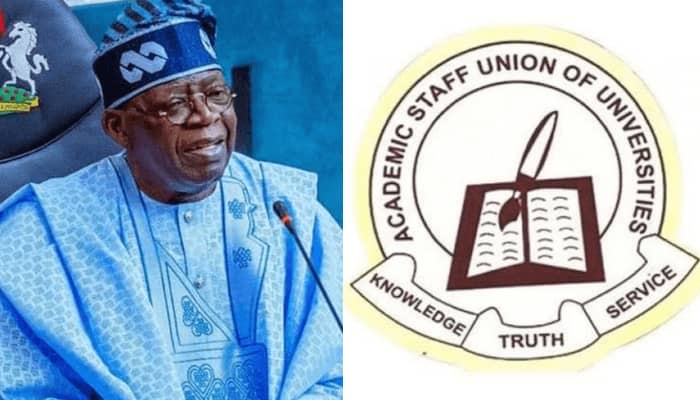
The Federal Government and the Academic Staff Union of Universities (ASUU) have signed a new agreement in Abuja at the TETFund Conference Hall. Effective January 1, 2026, the deal replaces the 2009 agreement and provides a 40% salary increase for lecturers, improved pension arrangements, additional research funding, and measures aimed at strengthening university autonomy. The agreement follows weeks of negotiation between the two parties.
Lecturers and students have welcomed the development, noting the potential for more stable academic calendars. Officials have emphasized that the agreement’s success will depend on timely implementation, consistent funding, and the enforcement of university autonomy provisions.
2. FEC approves ₦1.3 trillion for roads, agriculture, and security
The Federal Executive Council, chaired by President Bola Tinubu, has approved ₦1.3 trillion for key national projects. The breakdown includes ₦798 billion for road rehabilitation and construction, ₦312 billion for dry-season farming and agricultural inputs, and ₦190 billion for security operations and equipment. The approval was announced during the weekly FEC meeting in Abuja.
Government officials indicated that the funds are intended to improve infrastructure, support agricultural production, and strengthen security. Timely disbursement and project oversight were highlighted as critical to ensuring the funds translate into visible outcomes for citizens.
3. Tinubu signs executive order granting tax incentives for renewable energy investors
President Bola Tinubu has signed an executive order introducing tax holidays, accelerated depreciation, and import-duty waivers for companies investing in solar, wind, and mini-grid energy projects. The measure is aimed at attracting private investment in the renewable energy sector and improving access to electricity across the country.
Officials noted that the incentives are designed to support private-sector participation in power generation and facilitate investment in underserved areas. The government emphasized that the policy will work alongside existing regulations to encourage the expansion of sustainable energy infrastructure.
4. Minister orders immediate night-time palliative repairs on Lagos–Ibadan expressway
Minister of Works David Umahi has directed contractors to begin night-time palliative repairs on sections of the Lagos–Ibadan expressway. The repairs are intended to ease congestion, reduce vehicle damage, and limit disruption for commuters during the day.
The ministry indicated that the intervention responds to ongoing complaints from road users and aims to provide temporary relief while plans for full reconstruction are finalised. Officials said the work will continue through the night to minimise interference with daytime traffic.
5. Senate confirms seven new INEC Resident Electoral Commissioners
The Senate has confirmed seven new Resident Electoral Commissioners for the Independent National Electoral Commission, following a week of screening. The appointees represent different geopolitical zones and are expected to strengthen the commission ahead of upcoming elections, including off-cycle governorship polls and the 2027 general elections.
Observers noted that the confirmation fills key positions within INEC, allowing the commission to operate at full capacity. The commissioners’ performance in delivering transparent and timely elections will determine the effectiveness of the appointments.
6. FG signs MoU with UAE for agricultural technology transfer
The Federal Government has signed a memorandum of understanding with the United Arab Emirates to facilitate the transfer of agricultural technologies. The agreement covers smart irrigation, precision farming tools, and post-harvest management systems, and was finalised during a bilateral meeting in Abuja.
Officials said the MoU aims to provide smallholder farmers with access to modern farming practices that can improve yields and reduce post-harvest losses. Implementation, including training and equipment provision, will be critical to translating the agreement into practical benefits for farmers.
7. CBN reaffirms focus on financial literacy and consumer protection
The Central Bank of Nigeria has reiterated its commitment to promoting financial literacy and protecting consumers. Officials highlighted ongoing campaigns to increase awareness of financial products, complaint resolution channels, and consumer rights, particularly as digital finance adoption grows.
The CBN stated that educating the public is key to building confidence in the banking system. Officials also noted that sustained literacy efforts, combined with enforcement against non-compliant institutions, aim to expand financial inclusion and encourage broader participation in the formal economy.