

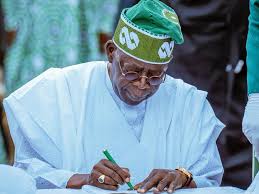
1. Tinubu sends 32 ambassadorial nominees to Senate as Nigeria rebuilds its foreign presence
President Bola Tinubu has submitted 32 ambassadorial nominees to the Senate, a move aimed at restoring Nigeria’s diplomatic footprint after long vacancies in key missions. The list mixes career diplomats and political figures, including Mahmood Yakubu, Reno Omokri, Femi Fani-Kayode, and former governors Ifeanyi Ugwuanyi and Okezie Ikpeazu. Career envoys like Shehu Barde and Ahmed Mohammed Monguno were also listed for postings to China, India, the UAE, the United Nations, and the African Union.
The nominations arrived alongside an earlier batch of three candidates considered for missions in the United States, United Kingdom, or France. Senate screenings will determine how quickly Abuja reactivates its global presence after two years of slow-paced diplomatic engagement.
2. Northern governors meet in Kaduna over rising child abductions across the region
Nineteen northern governors met in Kaduna to coordinate responses to a wave of child abductions that has affected several states in recent weeks. The discussion focused on intelligence gaps, porous borders, and the series of kidnappings that saw more than 400 children taken, including over 300 from a school in Niger State. Governors committed to joint patrols, shared intelligence systems, and new measures for communities in Kebbi, Kwara, and Borno.
The meeting included security chiefs and traditional rulers who backed a regional plan supported by proposed funding for surveillance tools and community guard training. The governors described the situation as a regional challenge requiring a unified, coordinated strategy rather than fragmented state-level efforts.
3. Senate deputy warns Kano governor against politicising insecurity amid recent raids
Deputy Senate President Barau Jibrin has cautioned Kano Governor Abba Yusuf against linking recent security lapses to federal failures, saying such claims could undermine efforts to coordinate responses to banditry. Jibrin issued the warning at a security forum in Abuja, referencing attacks that led to the deaths of students in Kebbi and displacement in border towns.
He stressed the need for collaboration between state and federal agencies, including intelligence sharing and investigations into groups financing criminal operations. The exchange highlighted growing political tensions around insecurity as communities continue to face daily threats in several northern states.
4. Former military governor Paul Ufuoma Omu buried in Delta with full military honours
Retired Major-General Paul Ufuoma Omu, a former military governor of the old South-Eastern State, was laid to rest in Ughelli, Delta, following a week of tributes from military and political leaders. Omu, who died at 85, was known for infrastructure projects and administrative reforms during his tenure, as well as later work on anti-corruption committees and youth mentorship initiatives.
Family members, community leaders, and government representatives described him as a disciplined administrator whose approach to governance shaped public service ideals in parts of the South-South. His burial drew wide attendance, reflecting his decades-long presence in national and regional leadership circles.
5. AfDB approves 500 million dollars to support Nigeria’s non-oil revenue reforms
The African Development Bank has approved 500 million dollars in budget support for Nigeria, targeting reforms that will expand non-oil revenue and reduce dependence on crude earnings. The package focuses on digitising tax administration, upgrading Federal Inland Revenue Service tools, and boosting capacity for revenue-generating agencies.
Government officials say the support aligns with broader fiscal reforms intended to stabilise public finances at a time of high inflation and foreign exchange volatility. The funds are tied to measurable outcomes that include widening the tax base and improving transparency in revenue collection.
6. Nigeria’s electricity distribution companies push for tariff review as costs rise
Distribution companies have renewed calls for tariff adjustments to keep up with rising operating costs and exchange rate pressures. Several DisCos argue that current tariffs do not reflect the real cost of service, especially in areas dependent on diesel-powered backups and imported equipment.
The Nigerian Electricity Regulatory Commission says any review will be guided by service quality benchmarks and the government’s ongoing plans to expand off-grid solutions. Consumers remain cautious as inflation continues to squeeze households already struggling with high fuel and food prices.
7. Super Falcons return to camp ahead of crucial Olympic qualifiers
The Super Falcons have returned to camp as preparations intensify for the next round of Olympic qualifiers. Key players from European and local leagues reported early, with technical staff focusing on tactical cohesion and player fitness after a demanding club season.
The team will face a tough qualifying path, and the Nigeria Football Federation says early preparation is essential to securing a ticket to Paris. Training sessions are expected to ramp up in the coming days before the squad departs for the first-leg fixture.


Very informative, thank you primeonlinenews.
God bless Nigeria, God bless Nigerians, God bless you.